Every Korean skincare routine eventually arrives at the same question: are my serums actually penetrating?
The honest answer, for most topical actives, is: partially. The stratum corneum — the outermost skin layer — is a remarkably effective barrier. It evolved to keep things out. Standard topical application relies on passive diffusion, which favors small molecules at the right pH. Large-molecule actives like PDRN work within these constraints, but their penetration depth is inherently limited without a delivery mechanism.
This is exactly the gap the Medicube AGE-R Booster Pro is designed to fill. It is also the most persuasive product Medicube makes from a revenue-per-unit perspective — a single device sale at $299 generates more affiliate commission than roughly 200 toner sales at 3–4% Amazon rate. That context is worth knowing. But the device also has a credible scientific basis, which is why it appears in this review rather than being dismissed.
What the Booster Pro actually is
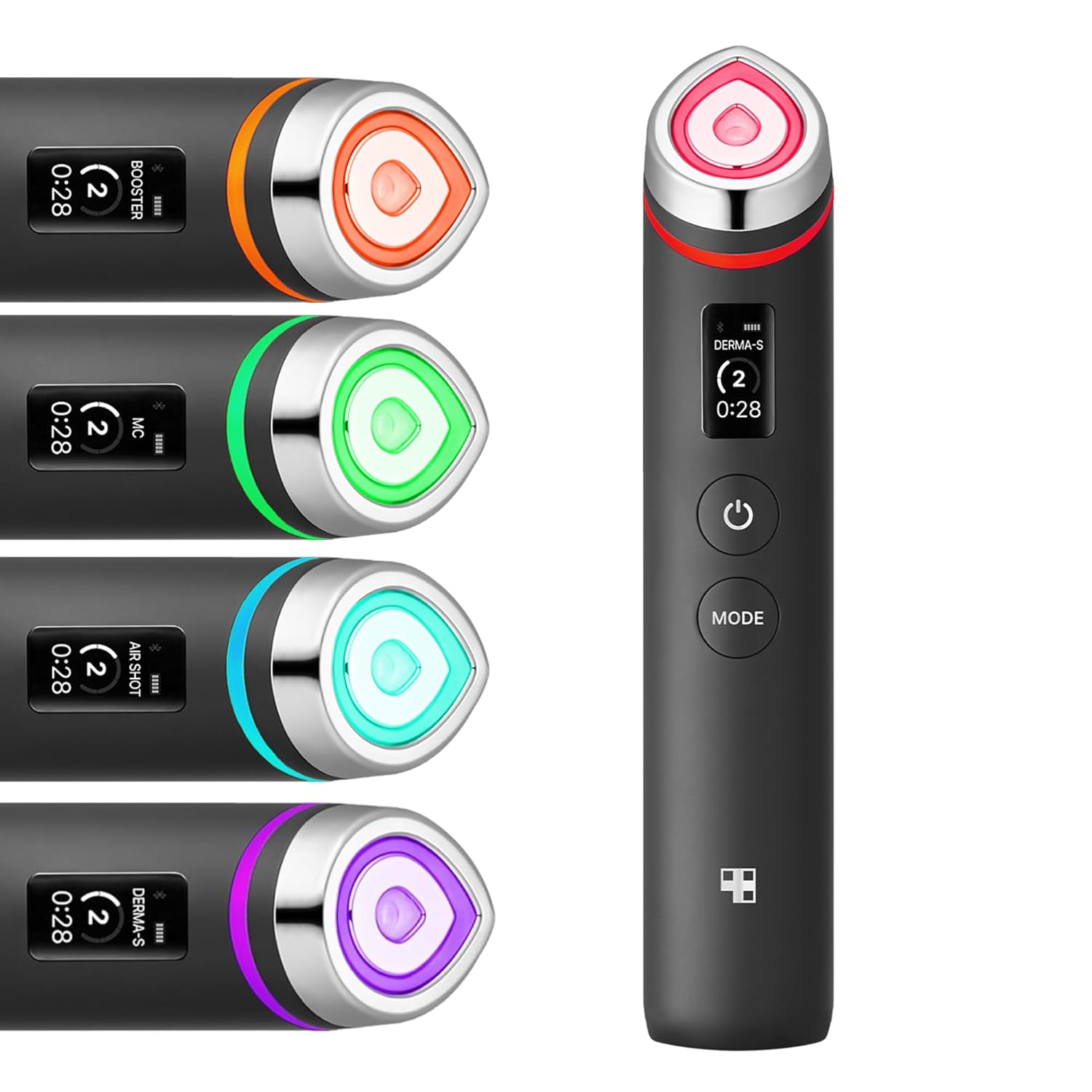
The Medicube AGE-R Booster Pro is a handheld multifunctional beauty device with six distinct modes built around one primary technology: electroporation.
Electroporation uses controlled electrical pulses to temporarily increase the permeability of cell membranes and the stratum corneum. The pulses create brief, reversible microchannels through which water-based active ingredients — including PDRN, niacinamide, peptides, hyaluronic acid — can pass at concentrations that passive diffusion cannot achieve.
Medicube’s published claim for the Booster Pro in Air Shot mode: up to 791% improvement in skin permeability versus topical application alone. The standard electroporation mode claims 785%. These figures come from Medicube’s own in-house testing, which is a limitation to note — they are not independently replicated in peer-reviewed literature specific to this device. However, electroporation as a delivery mechanism is extensively documented in dermatology research as genuinely effective for driving macromolecules through skin.
The practical implication: PDRN molecules, which are too large for significant passive topical penetration, can be driven through electroporation channels that would otherwise be impermeable to them. This is not marketing language. It is the same delivery mechanism used in clinical mesotherapy-adjacent treatments.
The six modes
1. Electroporation (EMS mode) The core technology. Electrical pulses increase membrane permeability for active ingredient delivery. Use with water-based serums immediately before the electroporation step — the device drives the applied product in.
2. Air Shot (needle-free mesotherapy) The most aggressive mode. Combines electroporation with an intensified pulse pattern that mimics the delivery depth of needle mesotherapy without breaking skin. Medicube claims 791% permeability increase in this mode — their highest figure — with internal testing showing a 34.5% reduction in pore count after two weeks. Used on dry skin without product; it exfoliates and prepares rather than drives serums in. Recommended every two to three days, not daily.
3. Microcurrent Low-level electrical current mimicking the body’s own bioelectric signals. Targets the facial musculature beneath the skin — microcurrent causes repeated micro-contractions that tone and lift over time. Different mechanism from electroporation; addresses structural/muscular laxity rather than ingredient penetration. Think of this as the “exercise” mode for facial muscles.
4. EMS (Electrical Muscle Stimulation) Similar to microcurrent but at a different frequency range — EMS produces more visible muscle contractions, which users typically feel as a slight pulsing. Longer-term use builds the “scaffolding” effect that contributes to the lifted appearance associated with regular device use.
5. LED Light Therapy Integrated LED in the device head emits wavelengths targeting specific skin concerns. Medicube does not publish the exact nm output, but the modes typically include red (630–700nm range, collagen stimulation, wound healing) and potentially near-infrared. LED at these wavelengths has a well-established evidence base for fibroblast activation — a mechanism that runs in parallel with PDRN’s own fibroblast signaling.
6. Sonic Vibration High-frequency physical vibration that aids in product distribution and absorption, and has a mild lymphatic drainage effect when used with massage-direction strokes. The gentlest mode, safe for all skin types including sensitive.
The PDRN synergy: why this pairing specifically makes sense
Medicube did not design the AGE-R Booster Pro as a generic device. The PDRN connection is deliberate — they sell a PDRN Booster Gel specifically formulated for use with the device, and the entire AGE-R ecosystem is positioned around making their serum actives perform at clinical-adjacent depth.
The logic is sound. PDRN’s primary limitation in topical form is molecular size — fragments that should be doing repair work in the mid-dermis are often stopping in the upper epidermis. Electroporation opens a delivery pathway that circumvents that limitation. The combination of:
- PDRN serum applied to skin
- Electroporation driving it through the stratum corneum
- Adenosine A2A receptors in the epidermis and upper dermis activated at higher PDRN concentration
…is a genuinely more powerful system than any topical application alone. This is why dermatology clinics that offer PDRN treatments often use electroporation devices alongside the products when injections are not being used.
The Medicube integration makes this accessible at home. The device also connects to the AGE-R app via Bluetooth, which builds customized routines, tracks progress over time, and guides sessions step-by-step — a practical differentiator over simpler wand competitors with no feedback loop.
How to use it with a PDRN routine
The Booster Pro works best as a dedicated treatment step, not a passive device you swipe over dry skin. Protocol:
Before use:
- Cleanse and apply toner as normal
- Apply your PDRN serum or essence generously to the treatment area — the device will be driving this product in, so application should be slightly more liberal than standard use
- Skin must be damp/product-wet throughout the device session
Device session (5–10 minutes):
- Start with the Sonic Vibration mode to warm and prepare skin (1–2 minutes)
- Switch to Electroporation or Air Shot mode for the main delivery pass (3–5 minutes). Use slow, upward strokes, 3–5 seconds per section. Do not rush.
- If addressing specific areas (under-eye, forehead), use Air Shot in those zones (1–2 minutes)
- Finish with Microcurrent or EMS for lifting (2–3 minutes)
- LED can run concurrently during any mode — hold still over a target area for 1–2 minutes
After:
- Apply remaining routine steps (moisturizer, SPF in AM) immediately after
- Do not rinse
Frequency: Daily use is safe for Electroporation and LED modes. Air Shot and EMS are best used three to four times per week to allow the skin’s electrical signaling to normalize between sessions.
Honest limitations
The penetration claims are from Medicube’s own testing. The 785–791% figure is compelling, but without independent peer review of this specific device and protocol, it should be treated as indicative rather than clinically verified. Electroporation in general is well-supported; this device’s specific output has not been independently validated.
Durability has been flagged in long-term reviews. A meaningful number of users report device failure around the 8–14 month mark, with some noting moisture ingress near the LED head. Medicube’s customer service has been described as difficult by multiple reviewers. Buy from a retailer with a clear return window — Amazon’s standard return policy applies if purchased there.
It requires a learning curve. The first week of use often produces mild redness or tingling as skin adapts to the electrical stimulation. This is normal and resolves, but users who do not expect it may abandon the device prematurely.
Product matters. Electroporation drives in whatever is applied to the skin. This is an argument for using high-quality PDRN serums (the Medicube or Rejuran products covered elsewhere on this site) rather than poorly formulated alternatives. A $20 serum driven in at 791% depth may deliver 791% of its problems alongside its benefits if the formulation is not clean.
Not for everyone. Contraindications include: active breakouts or open wounds in the treatment area, pregnancy, pacemakers or electronic implants, epilepsy, recent filler or Botox (within two weeks). Always patch test before full-face use.
Booster Pro vs Booster H: which to buy
Medicube sells two current-generation electroporation devices: the Booster Pro (B0CWK6YQ7V) and the original Booster H (B0BDCRFB9T).
| AGE-R Booster Pro | AGE-R Booster H | |
|---|---|---|
| Price | ~$228–$291 | ~$99–$199 (frequent sales) |
| Modes | 6 (electroporation, Air Shot, microcurrent, EMS, LED, sonic) | 1–2 (electroporation focus) |
| Air Shot | Yes — 791% permeability claim | No |
| Microcurrent / EMS | Yes | No |
| LED therapy | Yes | No |
| Best for | Full facial treatment system | Budget entry to electroporation |
The Booster H frequently goes on sale to $99–160, making it an accessible starting point for first-time device users who want to test electroporation before investing in the full Pro suite. If you use PDRN serums daily and want the most complete at-home treatment system, the Booster Pro is the right choice.
The Booster H for budget-conscious entry:
How it compares to alternatives
At $299, the AGE-R Booster Pro sits below NuFace Trinity ($339), above most basic microcurrent devices, and significantly below professional-grade electroporation equipment used in clinics ($500–2,000+).
The Booster Pro’s advantage over NuFace is the multi-mode suite — NuFace is primarily a microcurrent device; the Booster Pro includes electroporation as its primary technology, which is specifically relevant to the PDRN delivery argument. For users already in a PDRN routine, the Booster Pro is the more relevant pairing.
The Booster Pro’s advantage over budget electroporation devices is the Medicube ecosystem integration — the PDRN Booster Gel is specifically formulated to work with the device’s electrical characteristics, and the full routine architecture (serums → device → moisturizer) is designed as a coherent system rather than mixing unrelated products.
The serums to pair with it
For maximum benefit from electroporation-driven delivery, use the highest-concentration, cleanest-formulation PDRN serums available. These are the three we would run through the Booster Pro:
Medicube PDRN Peptide Serum — designed for the Medicube ecosystem, clean water-based formulation, PDRN + peptides driven to increased depth via electroporation is the intended use case.
Rejuran Turnover Ampoule — c-PDRN® via DOT® Technology plus electroporation is a compelling combination: two independent penetration-enhancement mechanisms running simultaneously. Premium option for those who want to maximize delivery.
VT PDRN 100 Essence — the minimalist, high-PDRN-concentration watery formula is ideal for electroporation delivery precisely because of its thin consistency. Thin, water-based serums conduct electrical current more evenly and penetrate more readily than thick or oil-containing formulas.
The bundle option
Medicube sells a PDRN Pink Glow Home Aesthetic Full Set (~$319) that packages the Booster Pro with the PDRN Pink Peptide Serum — the serum specifically formulated for electroporation delivery. If you are buying the device and do not already have a PDRN serum, this is the most logical entry point: the serum is designed around the device’s electrical characteristics, and the combined price is better than buying separately.
Final assessment
The Medicube AGE-R Booster Pro earns its place in a PDRN routine for a specific reason that most beauty device reviews miss: it addresses the fundamental limitation of topical PDRN — molecular size versus skin barrier — with a technology that has genuine scientific backing.
It is not a magic device. The 785% penetration claim requires independent verification. The learning curve is real. The $299 price is significant.
But if you are already spending $40–70 per month on PDRN serums and the question is whether they are actually working at the depth you are paying for, the Booster Pro is a credible answer. For the PDRN-committed user who wants to close the gap between topical application and clinical mesotherapy results, this is the most logical tool currently available at the consumer price point.
Stylevana frequently prices it below Amazon — worth checking both links above before buying.